 Image 1 of 1
Something shifted. Maybe gradually, maybe all at once. You were present - or at least going through the motions - and then you weren't. You need space you can't explain. Things about them that used to be fine are suddenly kind of a lot. You're not sure if this is information or if something is wrong with you. And the guilt of not being able to explain it to them, or to yourself, is its own separate thing to carry.
This worksheet is specifically for people who lean avoidant - who find that closeness tends to trip a wire at a certain point, that the people they're most attached to are also sometimes the ones they most want to escape. If you've been told to "just open up more" and found that advice completely useless because it doesn't tell you anything about what to actually do, this was written for you.
Because pulling away usually isn't about not caring. It's usually about caring too much and not knowing how to survive that.
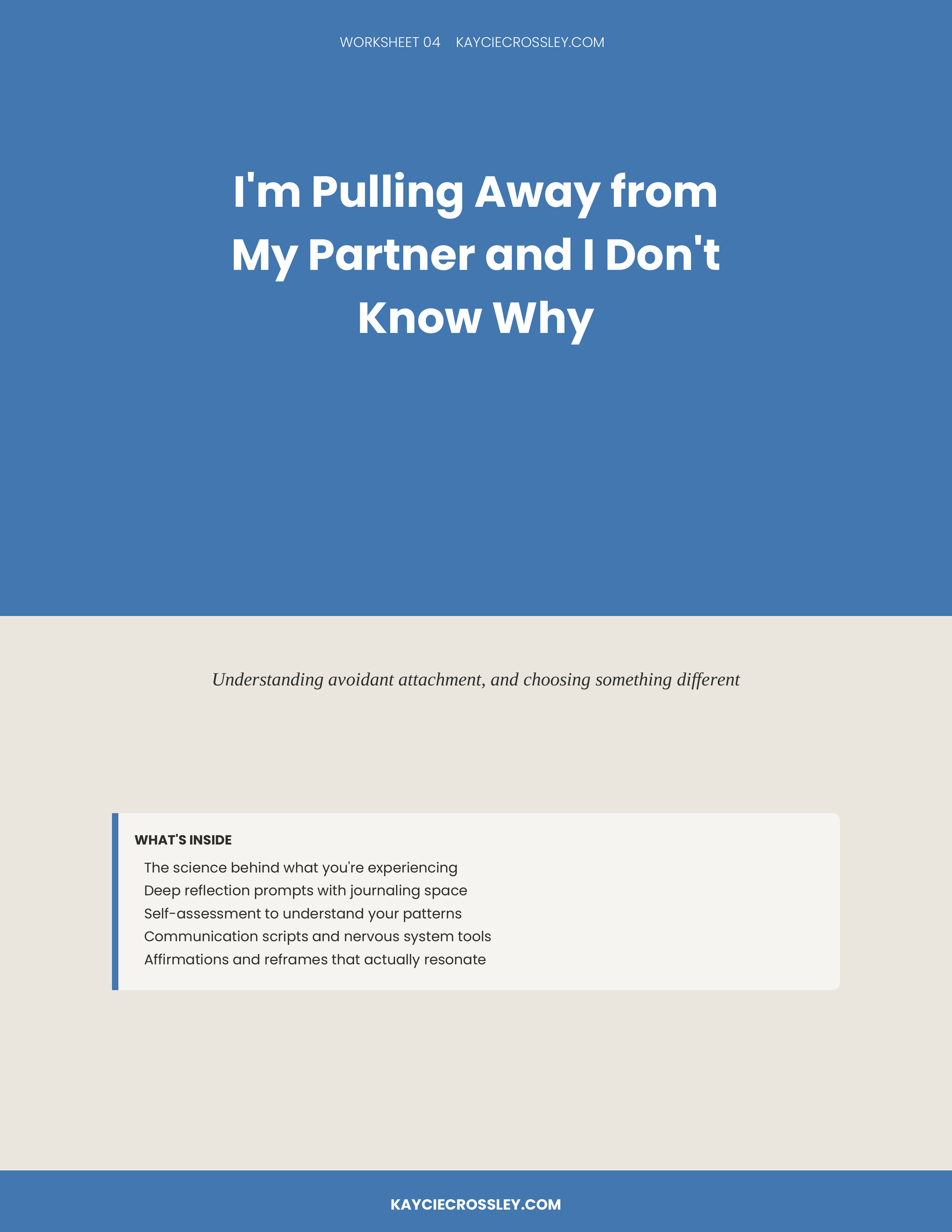
What's inside:
✦ What avoidant attachment actually is and where it comes from - not the textbook version, the real one
✦ The specific internal experience of avoidant deactivation: why things that were fine suddenly feel irritating, why the person you love starts feeling like too much, and why that switch flip is not a verdict on the relationship
✦ The fear underneath the distance - the part that's harder to look at
✦ Deep reflection prompts to trace your withdrawal history and what closeness has historically meant to your nervous system
✦ The most important question: are these your patterns, or is something genuinely not working?
✦ What reconnection actually looks like - practical, specific, not "just be more vulnerable"
✦ Affirmations written specifically for avoidant attachment, not the anxious version everyone else gets
The distance keeps you safe and keeps you lonely at the same time. This worksheet is for figuring out which you actually want more.
Printable PDF. 17 pages. Yours forever.
Something shifted. Maybe gradually, maybe all at once. You were present - or at least going through the motions - and then you weren't. You need space you can't explain. Things about them that used to be fine are suddenly kind of a lot. You're not sure if this is information or if something is wrong with you. And the guilt of not being able to explain it to them, or to yourself, is its own separate thing to carry.
This worksheet is specifically for people who lean avoidant - who find that closeness tends to trip a wire at a certain point, that the people they're most attached to are also sometimes the ones they most want to escape. If you've been told to "just open up more" and found that advice completely useless because it doesn't tell you anything about what to actually do, this was written for you.
Because pulling away usually isn't about not caring. It's usually about caring too much and not knowing how to survive that.
What's inside:
✦ What avoidant attachment actually is and where it comes from - not the textbook version, the real one
✦ The specific internal experience of avoidant deactivation: why things that were fine suddenly feel irritating, why the person you love starts feeling like too much, and why that switch flip is not a verdict on the relationship
✦ The fear underneath the distance - the part that's harder to look at
✦ Deep reflection prompts to trace your withdrawal history and what closeness has historically meant to your nervous system
✦ The most important question: are these your patterns, or is something genuinely not working?
✦ What reconnection actually looks like - practical, specific, not "just be more vulnerable"
✦ Affirmations written specifically for avoidant attachment, not the anxious version everyone else gets
The distance keeps you safe and keeps you lonely at the same time. This worksheet is for figuring out which you actually want more.
Printable PDF. 17 pages. Yours forever.